Learn, converse, develop
Core voice and vision start stationary with push-to-talk, a visible camera and real audio hardware. Supervised mobility follows the preserved release gates.
FEATURED CONCEPT FILM
Conversation, camera vision and removable modules, explained with a simulated robot and real manufacturer component photographs.
Simulated concept demonstration. Presenter visuals are AI-generated; narration uses the stock Holden voice. Component photos identify proposed hardware. No built robot, physical fit or tested performance is claimed. Speech captions are built into the video; an optional English caption track is also available.
“I’m Dave. Meet the next MORLOK concept.”
“Camera vision, two microphones, and a dedicated speaker.”
“Removable modules make access and upgrades easier.”
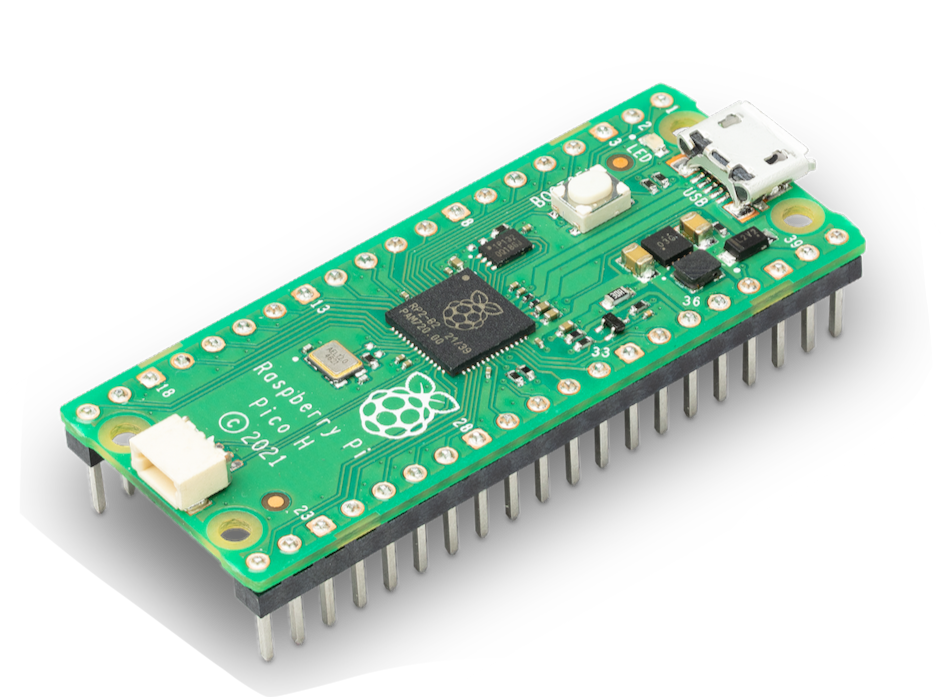
“Raspberry Pi for AI and Pico for motion control.”
“What’s this, MORLOK?” The simulated robot reply is “A blue mug.”
“A concept today. Next, we build and test.”
Manufacturer photographs: Raspberry Pi camera, Pi 5 and Pico H, Seeed reSpeaker Lite, Seeed speaker and Pololu driver. Respective manufacturer rights retained.
Music: “Pulse” by SRG774, Dark Sci-fi Audio Pack, released under CC0 1.0.
Start with conversation and camera-assisted questions on the existing Raspberry Pi 5, over home Wi-Fi or a phone hotspot. Visible camera, microphones, speaker and physical privacy come first. Supervised movement follows its own safety release.
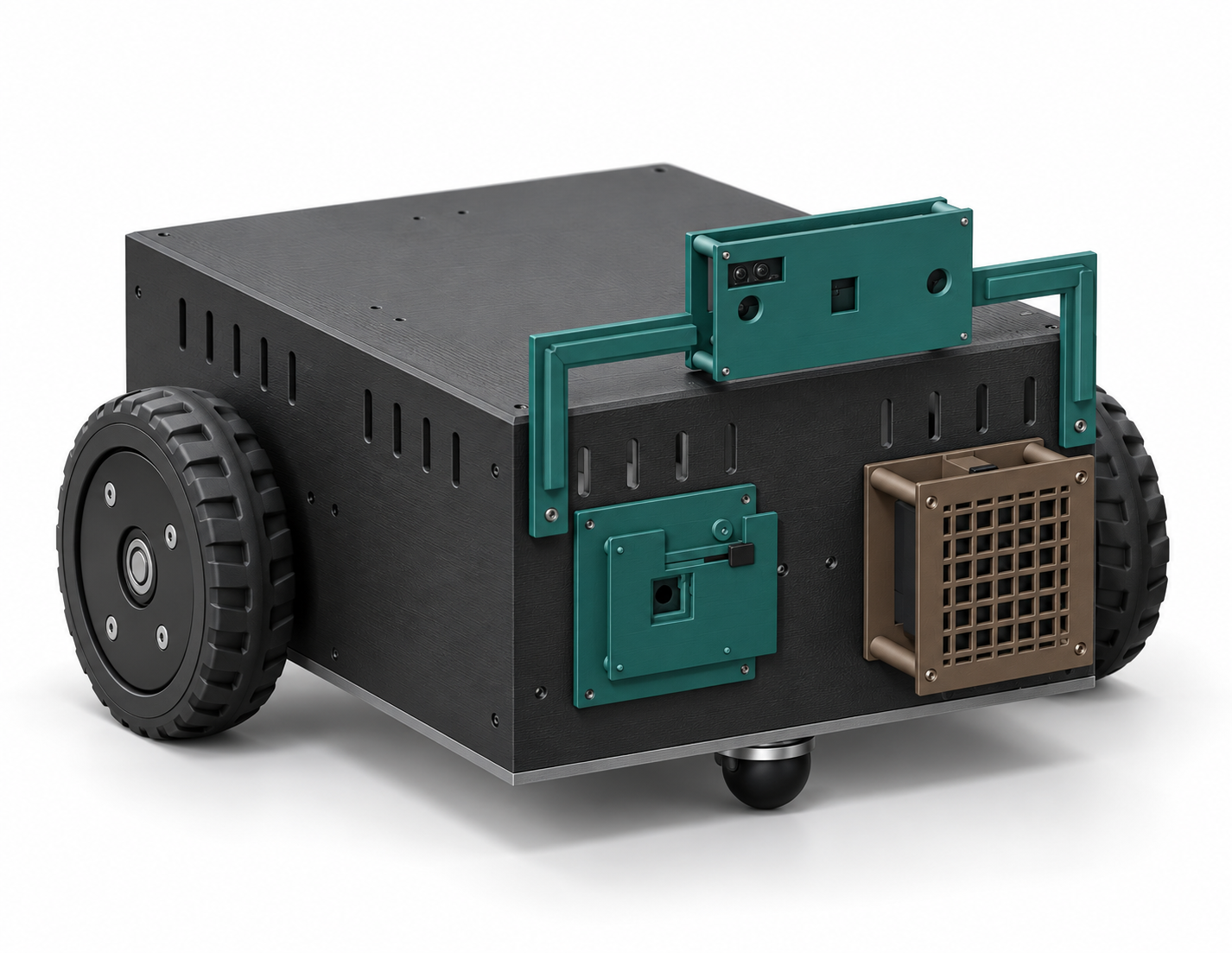
Core voice and vision start stationary with push-to-talk, a visible camera and real audio hardware. Supervised mobility follows the preserved release gates.
Keep stairs and drop-offs physically excluded. Autonomous navigation and unattended operation are outside this first build.
Invest in interfaces, service access and a tested foundation rather than a cheap assembly that must be replaced to expand.
The shell comes apart. Computing, motion control and power protection have separate jobs. Explore the four views below.
Left and right mean viewed facing the robot. All positions and adapters are proposed, not dimensioned fabrication instructions.
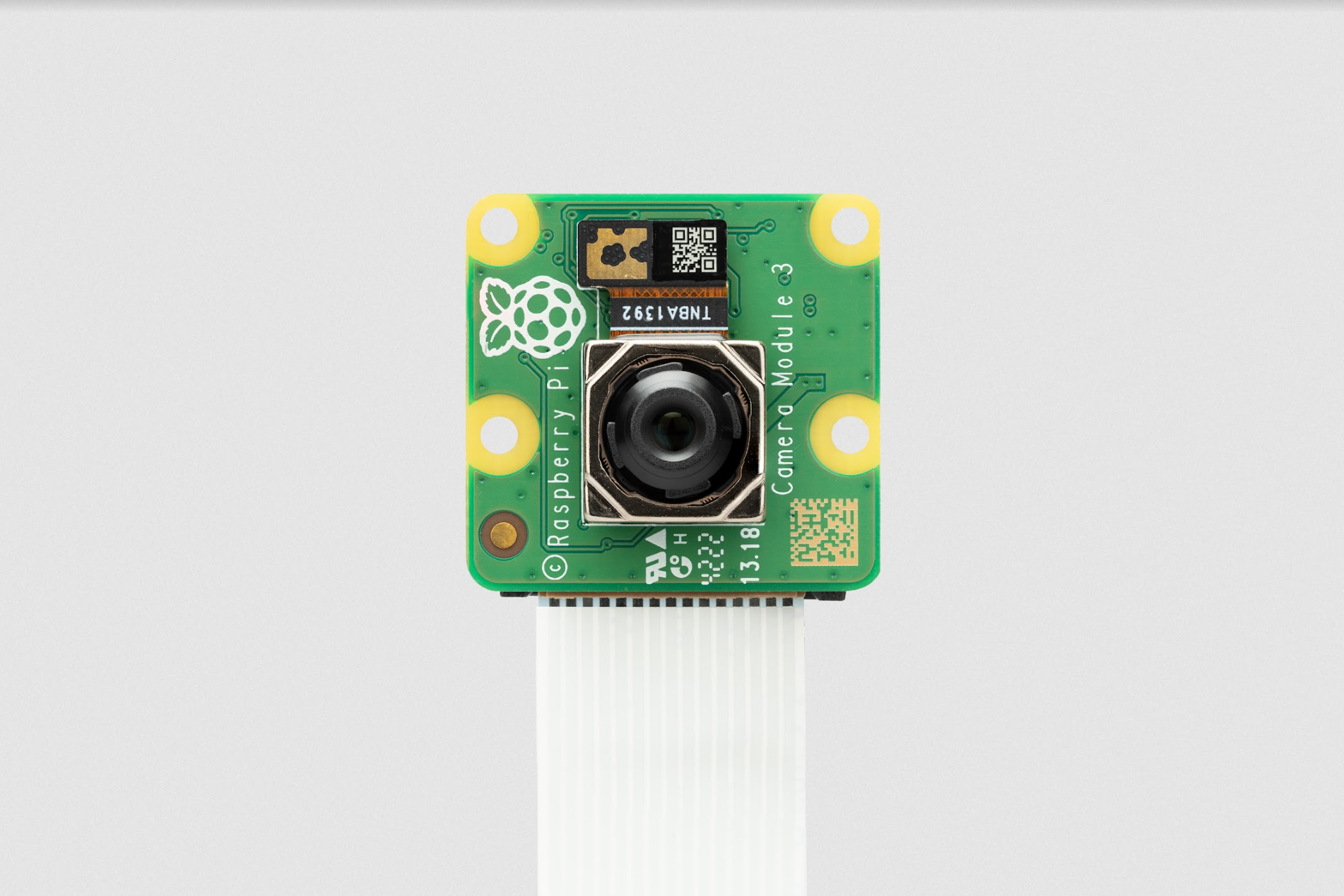
Camera Module 3 Standard, visible lens, opaque manual shutter and distinct capture indication. Requested snapshots, not autonomous obstacle clearance.
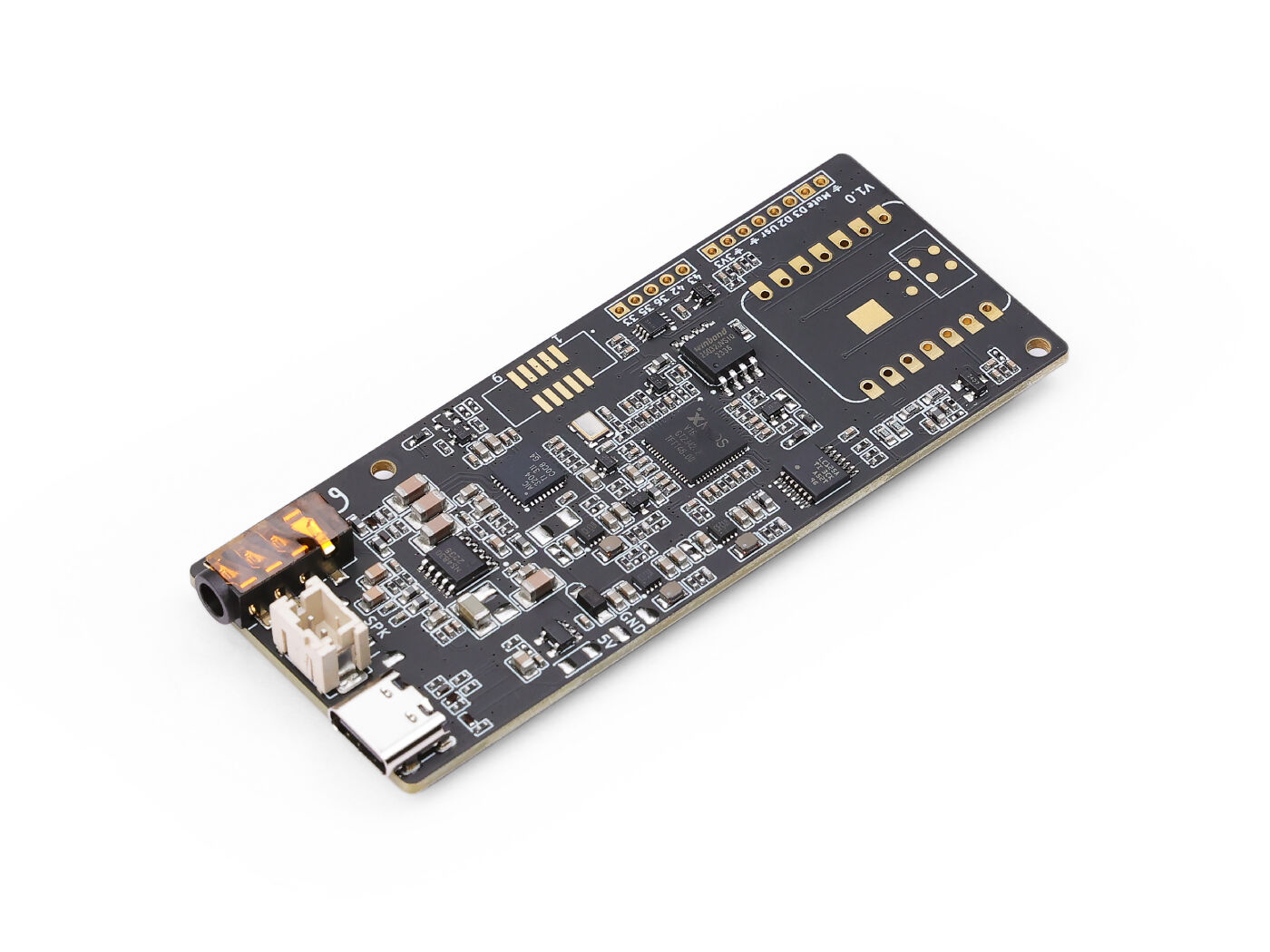
reSpeaker Lite USB-only, 35 × 86 mm, on a removable bridge. Keep acoustic holes clear of the fan and speaker vibration.
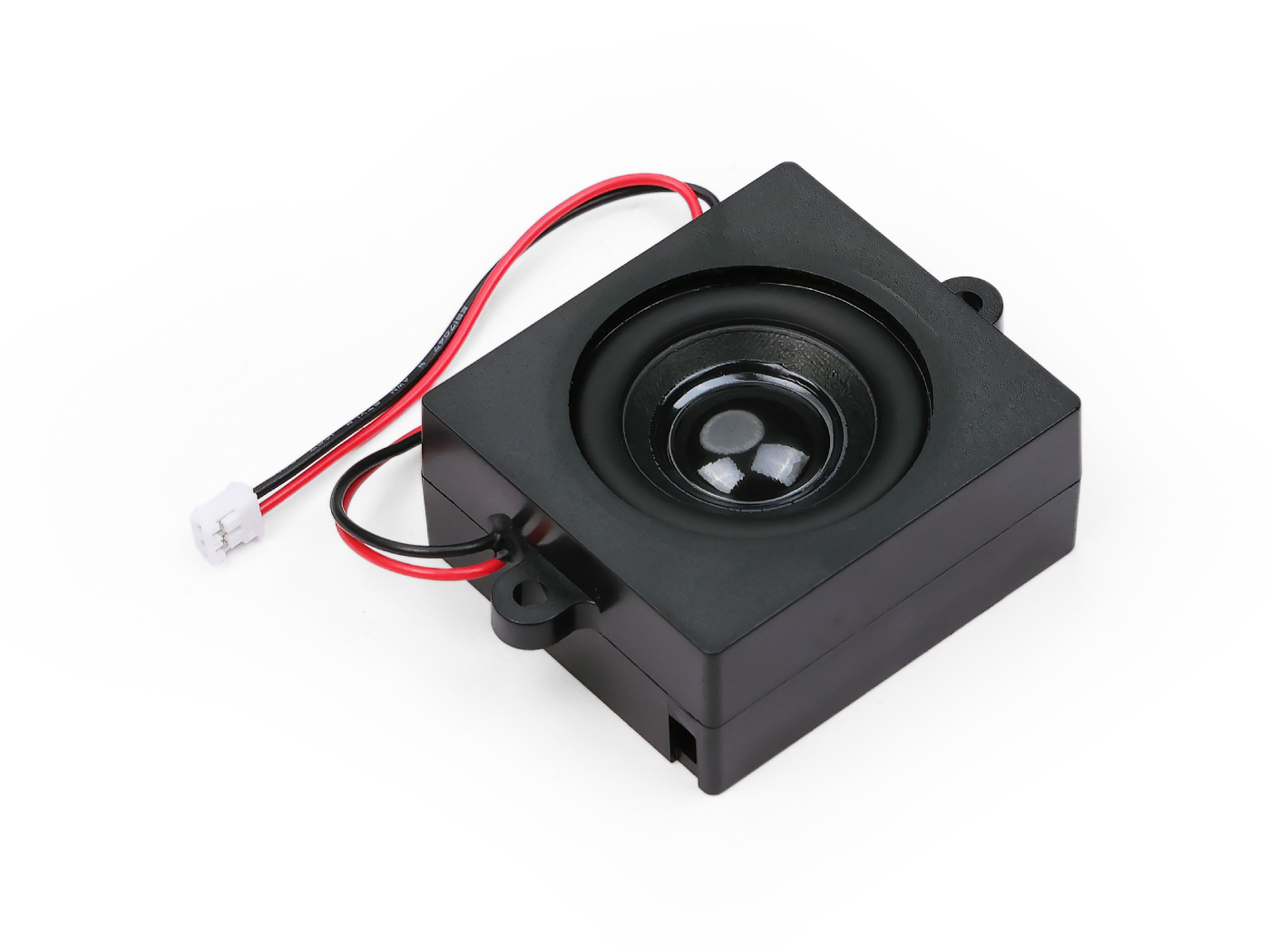
Matched Seeed 4Ω 5W enclosed speaker on a gasketed surface adapter. Its 50 × 45 × 22 mm body is not clearance in the 50 mm opening.
AUDIO OFF unplugs the sole USB audio path, disabling microphones and speaker. The board mute is not a verified independent cutoff. Opening the camera shutter does not start transmission.
Pi 5 uses home Wi-Fi or a phone hotspot; no cellular modem is required. Use authenticated local access and encrypted outbound APIs. Offline state must be visible.
The first release exposes no motion tools. Later bounded AI proposals pass a local validator and independent Pico limits. Network loss cannot replay an old movement or re-arm the robot.
OpenAI APIs require a custom application and separate setup/billing. Consumer ChatGPT voice and project files do not automatically connect to the robot. Full duplex, runtime and response latency require actual tests.
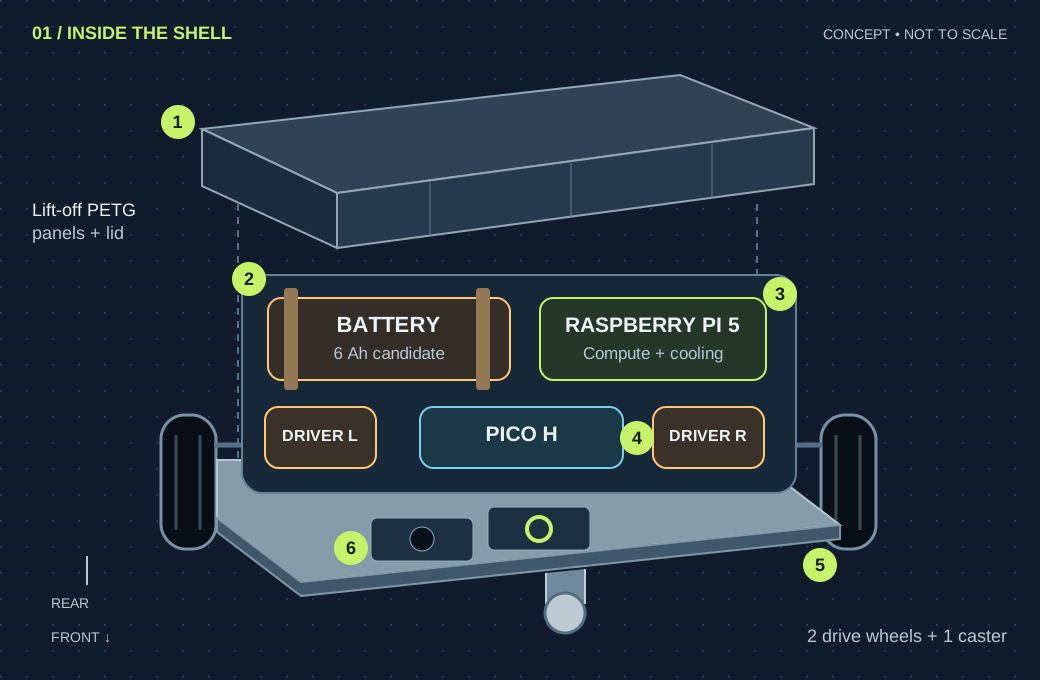
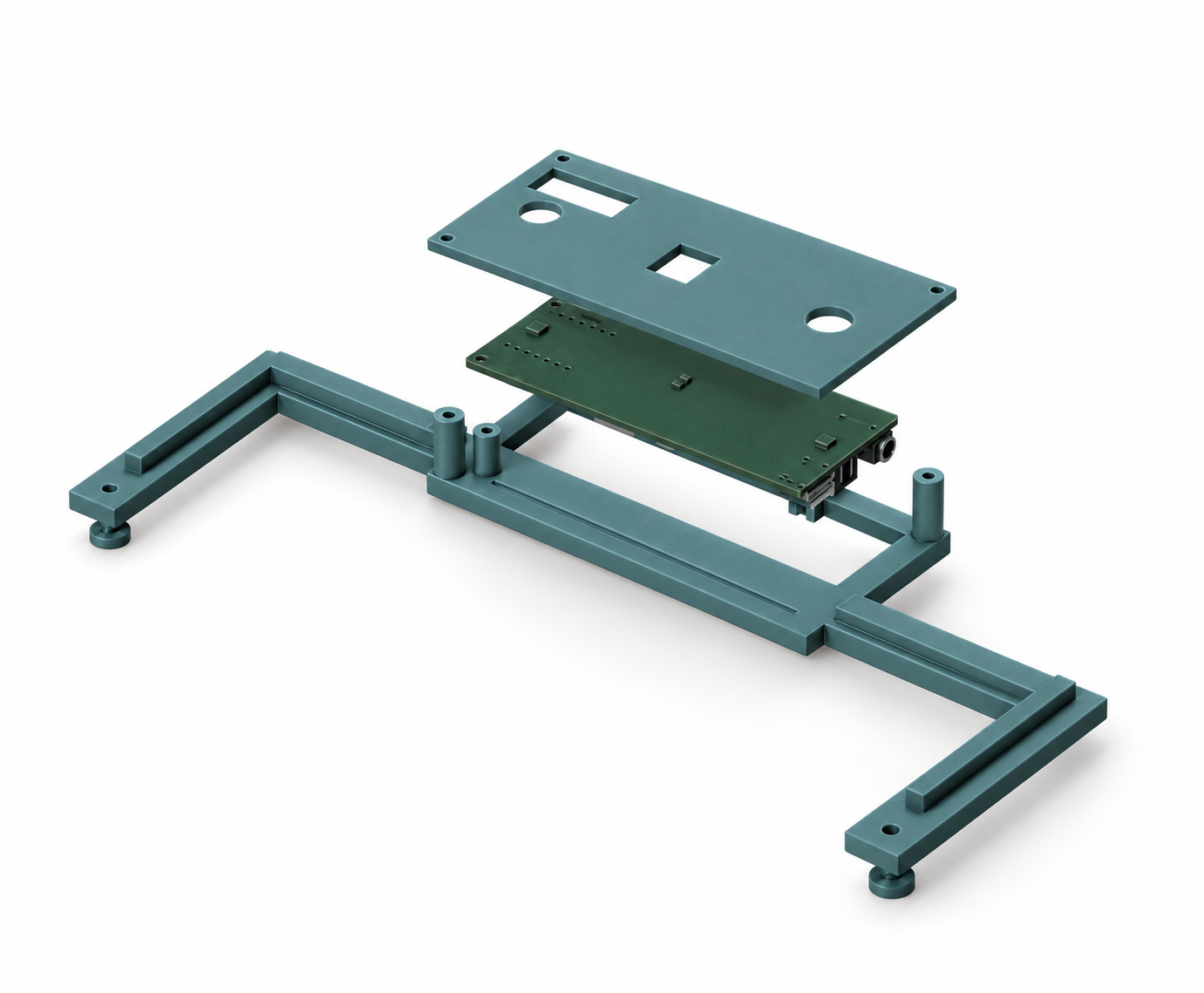
Removable panels protect the internals and carry replaceable front modules. They are not the primary drive structure.
The 6 Ah pack is a candidate. A low, secured cradle keeps it from shifting and leaves access for removal.
Runs core conversation, camera snapshots and the interface. Cooling, Wi-Fi antenna clearance and plugged-in cables need real space.
The original RP2040 Pico H supervises motion. One proposed DRV8874 carrier supplies each motor.
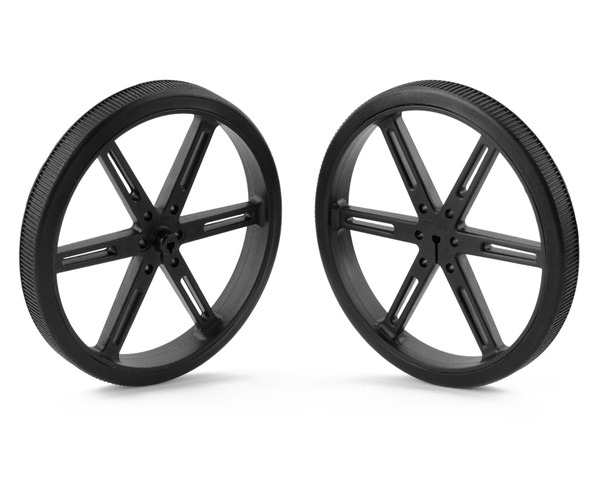
Motors, brackets, wheels, caster and battery restraint attach to the load-bearing aluminum deck.
MP1 proposes a front-view left camera/shutter carrier and right speaker grille, with a removable microphone bridge above. The old light carrier is optional.
The intended service layout uses separate Pi and controller/driver trays, a restrained battery and accessible fasteners. Allow room for cooling, wheel sweep, cables and removal, not just the bare circuit boards.
The current 24-piece R1 shell is preserved. R2 replaces two front panels and adds carriers. Any published envelope is a packaging reference until actual parts, holes, clearances and loaded caster height are measured. Neither the old 3 kg target nor the current 4 kg screening envelope establishes a payload rating.
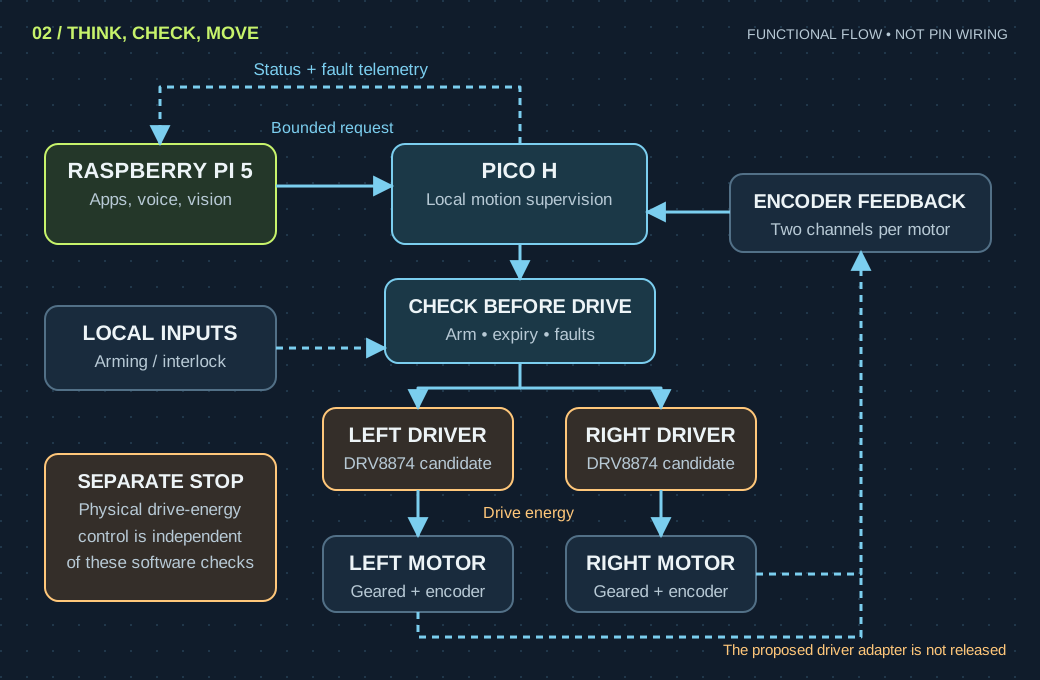
The Pi handles conversation, camera processing and the interface. It requests a limited action and receives status. A cloud response never becomes an unrestricted motor command.
The Pico evaluates arming, command freshness, encoder feedback and faults locally. Intended real-time control stays separate from Linux and network availability.
Different left and right wheel speeds steer the robot. Each encoder reports shaft motion; it cannot detect obstacles or prove distance traveled when a wheel slips.
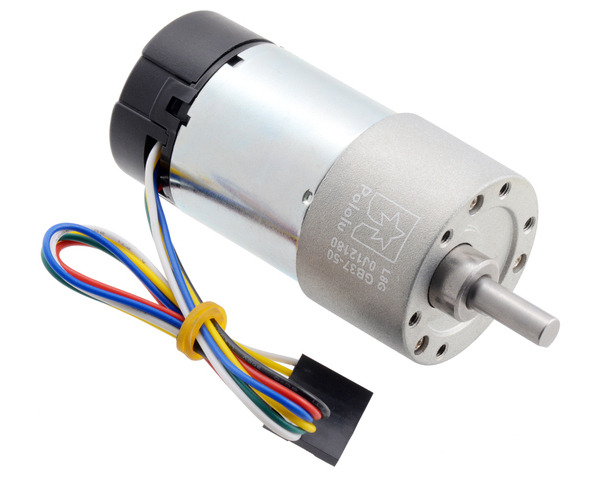
4693 evaluation branch: the 24 V motor has an exact 50:1 gearbox and 3,200 counts per output revolution at four-edge decoding. Lower-voltage operation is being evaluated. 4755 / Bench 3.1 branch: the 12 V motor uses approximately 102.083:1 and 6,533.33 counts. Motor identity and firmware calibration must match.
The two encoder channels indicate rate and direction. Their electrical levels need a reviewed interface before reaching the Pico. Driver current regulation, fault meaning, PWM/direction behavior and default states must also be reconciled; a DRV8874 is not a drop-in match for the older pulse-control branch.
Do not mix stop logic: R1 GP10 is a normally open hold button. Bench 3.1 GP10 is a normally closed interlock, with a separate GP11 arm button. Neither is the independent physical drive-energy stop. Existing Bench 3.1 firmware is motor-disabled; its 50 mm/s target is not a demonstrated safe speed.
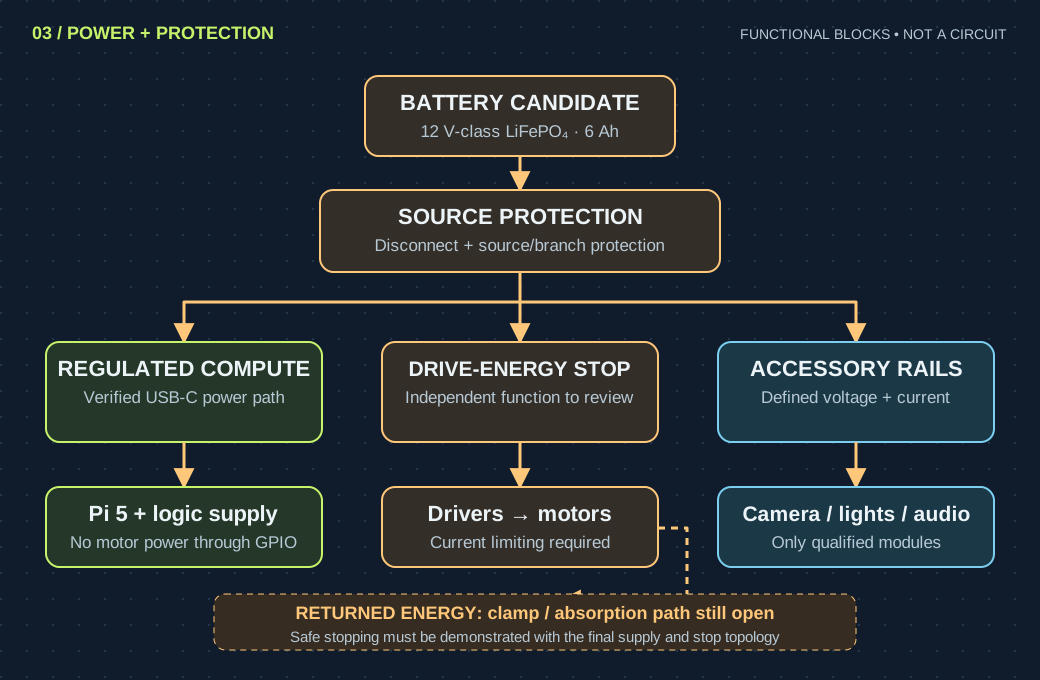
The Pi needs a verified USB-C power path. Core camera and audio need a measured power budget. Start on the suitable stationary Pi supply with traction disconnected. Motor current never flows through GPIO.
Two candidate drivers regulate motor current. Source and branch protection and an independent drive-energy stop remain mandatory.
Braking can return energy to the supply. Opening a source connection does not make that energy disappear. A safe absorption or clamp strategy is still unresolved.
The Bioenno BLF-1206A is a nominal 12 V, 6 Ah LiFePO₄ candidate, approximately 0.7 kg. Capacity is not a runtime promise. Its battery-management protection does not establish that the motor bus, charger, wiring or braking-energy path is safe.
The Pololu 4035 DRV8874 carrier provides adjustable current regulation, feedback and fault reporting. Its default current limit is unsuitable for this evaluation. Floating mode inputs and default fault behavior must be reviewed, not assumed. Open-air carrier ratings are not enclosed-robot ratings.
The 12 V 4755 branch must not inherit the candidate pack's maximum-voltage assumptions without a reviewed motor-bus solution. The final source, stop behavior, returned energy, motor temperature and restart prevention must pass together.
GPIO, Wi-Fi, voice and AI do not replace physical protection. This diagram is not permission to energize the robot.
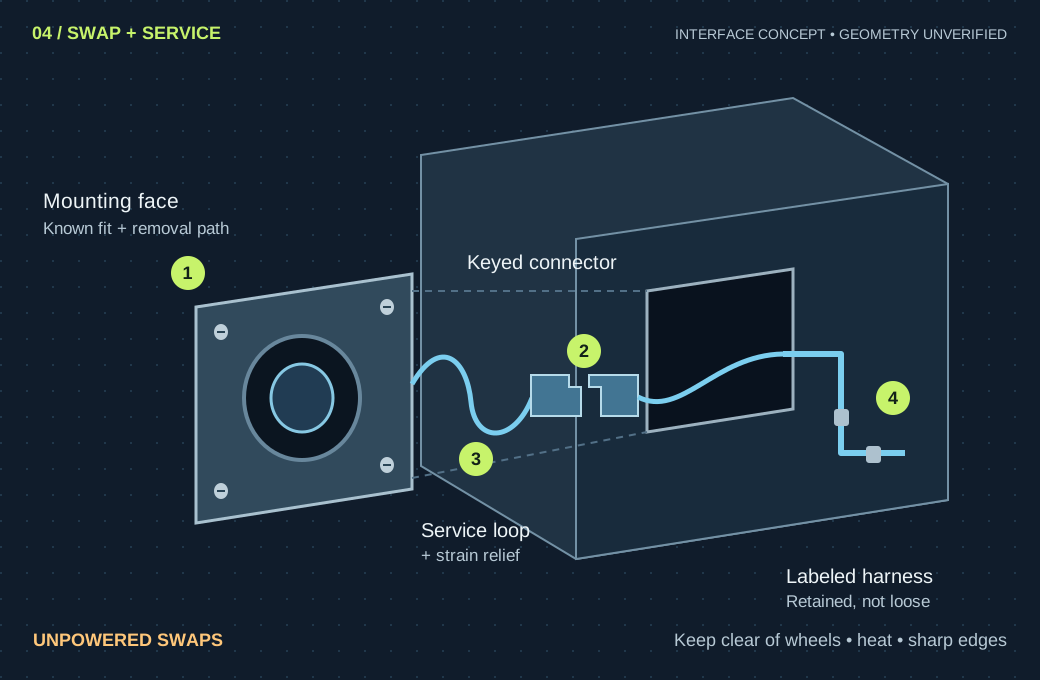
Confirm the envelope, fasteners, alignment and removal path. A carrier should come out without dismantling the whole robot.
Define power, polarity, current and data before choosing a connector. A mechanically compatible plug is not enough.
Allow controlled removal without pulling on a board. Support the opened lid independently; it must not hang from wiring.
Label both ends. Separate encoder signals from motor-current loops. Protect deck-edge crossings and keep clear of wheels and heat.
Each module needs a known mounting envelope, load, voltage, worst-case current, inrush, keyed connection, data interface and software identity. Define what the application does when the module is missing or faulty.
Swaps are unpowered unless that exact interface is qualified for hot-plugging. Recheck mass, cooling, electrical protection and affected tests after each change. Start with a coupon, corner and blank carrier before cosmetic shell batches.
Core audio starts stationary with reSpeaker Lite USB-only and its matched speaker. A labeled sole USB disconnect disables both capture and playback; its board mute is convenience-only. Begin half-duplex, then test echo cancellation through the same playback device. The opaque camera shutter blocks the view. Cloud media requires an explicit privacy and retention choice.
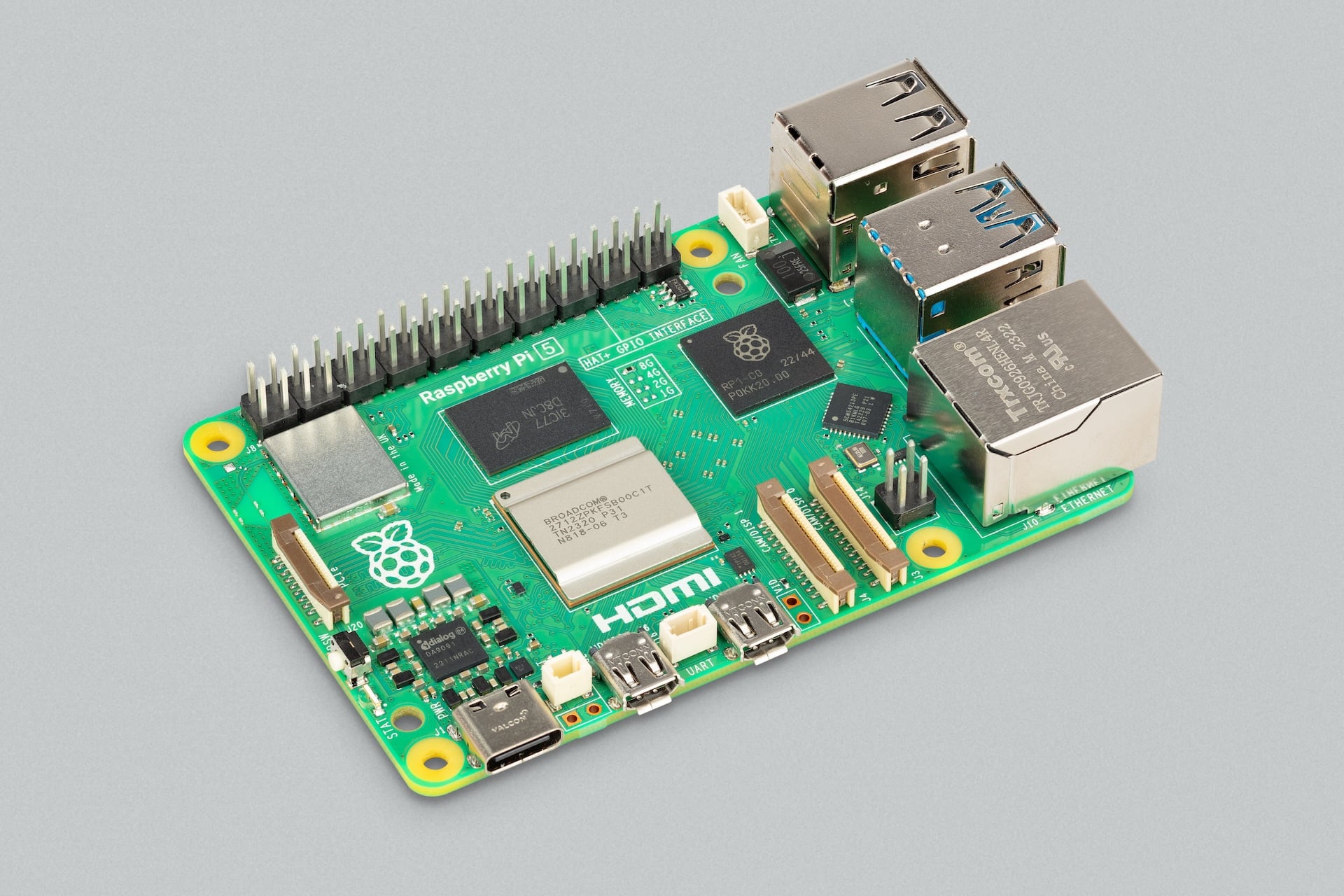
Component references: Pi 5 · Pico · 4693 motor and encoders · DRV8874 carrier
Expansion is a mechanical, electrical and software contract. A part fitting in a hole is only the beginning.
Conversation, read-only telemetry, later supervised tools
Core camera, speaker cassette, microphone bridge; future sensors
Keyed connectors, labeled harnesses, defined power and data
Metal deck, restrained battery, drive system, independent controller
Swaps are unpowered unless a specific interface has been qualified for hot-plugging.
Four side, four end and four lid panels; eight joiners; four handed posts. The separate fit coupon is a test piece.
Two front panels are replaced, keeping the shell count at 24. Existing blank, camera and light carriers are additional parts. New speaker, shutter and microphone adapters require measured qualification.
Qualify one coupon, a corner and a blank carrier first. Keep cooling, lenses, microphones and the physical stop unobstructed.
Project planning revision MP1 · 2 October 2026 · Candidate configuration, not a released build.
This is a dependency sequence, not a promised calendar. Each stage ends with evidence, and failed checks loop back before the next one begins.
Project planning revision MP1 · 2 October 2026 · Candidate configuration, not a released build.
Reuse the owned Pi 5 kit and AD5X. Price stationary interaction first. Amazon is preferred; Seeed Studio and Pololu direct are the two exact-part alternatives. Use the new shopping subpage for current quantities, offers and hold points.
Phase 0 buys nothing. Phase 1 adds only missing camera, audio and correct cables after identity checks. Phase 2 qualifies measured adapters and test prints. Phase 3 buys a coordinated mobile-power and drivetrain set only after its design review. Expansion needs a use case.
USD observations checked 2 October 2026. The new shopping subpage adds verified exact Seeed and Pololu offers to the earlier Amazon observations. Delivery, tax, returns and final purchase eligibility are not established. Missing prices are unknown, never zero.
The older M3 assortment link redirected to M2 hardware. A claimed reSpeaker Lite listing conflicts between two- and four-microphone descriptions. A cable advertised as official has different manufacturer branding. The camera and Pico H identities were found, but current seller-specific offers were absent. No substitute is silently accepted.
Only the two stated direct stores supplement Amazon as purchasing sources; other manufacturer links are technical evidence. The old $450–575 reference-and-allowance range excluded these core interaction modules and is not a current Amazon total. There is no complete revised-robot quote yet. Open the consolidated buy-once register.
Project planning revision MP1 · 2 October 2026 · No purchases or hardware release.
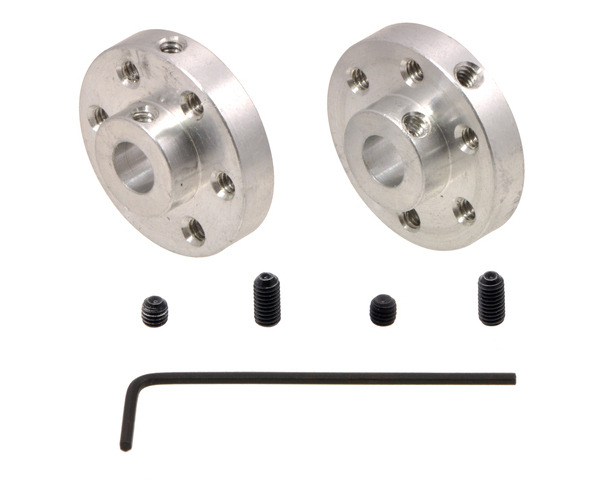
Original CAD and software exist. Historical digital checks are useful. Neither proves that the physical robot is safe, fitted or tested.
4693: 24 V, exact 50:1, 3,200 encoder counts per output revolution at ×4 decoding.
4755: 12 V, approximately 102.083:1, about 6,533.33 counts. The 14.6 V pack case needs a reviewed motor-bus solution.
Neither firmware calibration nor voltage assumptions are interchangeable.
R1: GP10 is a normally open hold button.
Bench 3.1: GP10 is a normally closed interlock, with a separate GP11 arm button.
The same pin number does not mean the same behavior. A GPIO input never carries motor current.
Motor overload, returned braking energy and the independent drive stop remain design gates.
The old estimated subtotal is 2.956 kg before motors and other hardware. Two reference motors alone bring it to 3.366 kg.
The 6 Ah candidate reduces the shell/deck/motor/battery subtotal to 2.386 kg, before other hardware. The current 4 kg screening envelope is not a payload release.
Existing Bench 3.1 firmware is motor-disabled. Its 50 mm/s target cap is a bench candidate, not a measured safe speed. The proposed DRV8874 pair requires a new reviewed adapter; its default current limit is unsuitable. The older 0.20 m/s goal is not released.
These project revisions document different assumptions. Reconcile them before selecting a physical configuration.
Public presentation adapted from the project's Robot Space, planning revision MP1, 2 October 2026. Manufacturer references describe components, not validation of the assembled robot. Original project files and source pages are not required to use this guide. No purchases, printing, flashing, power-up or physical tests were performed to create it.